Decoding Layered Promotion Triggers That Extend Playtime in Hybrid Mobile Slot and Table Environments
Vera Sullivan · Jul 8, 2026
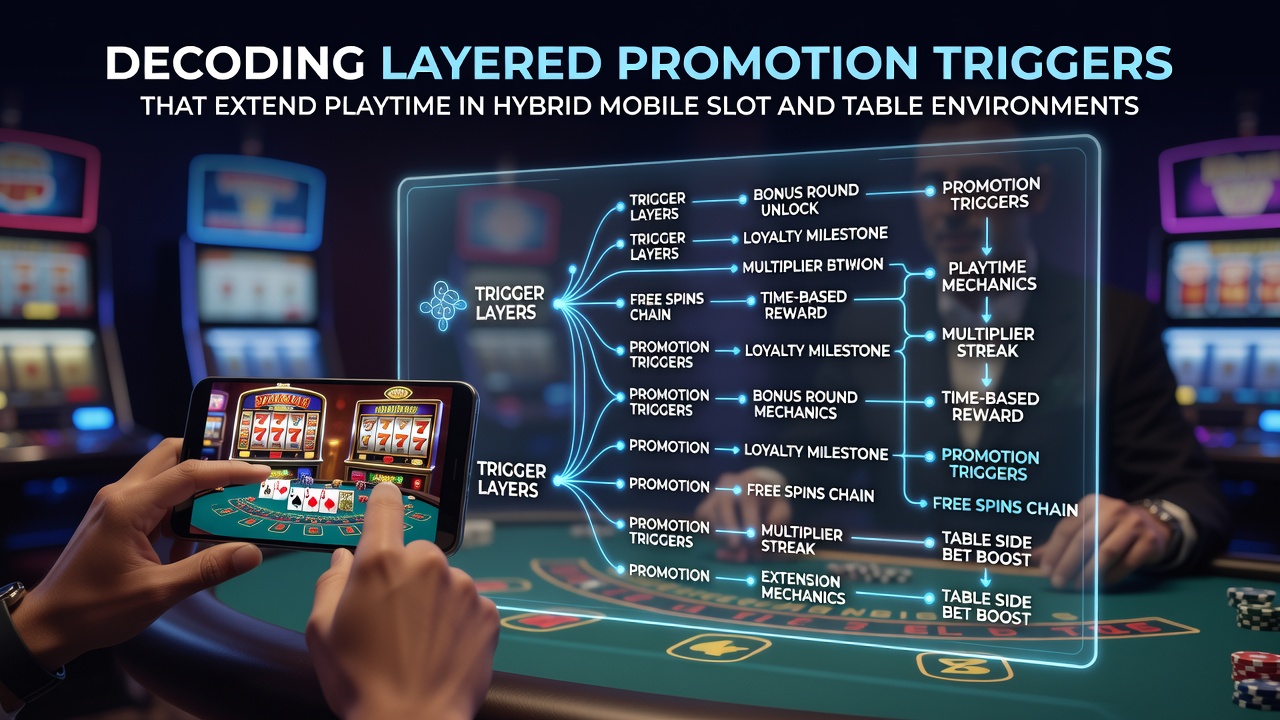
Decoding Layered Promotion Triggers That Extend Playtime in Hybrid Mobile Slot and Table Environments
Hybrid mobile platforms that combine slot reels with live and automated table games have developed intricate promotion systems designed to sustain user sessions through sequential reward layers. These structures activate when players meet specific activity thresholds, and operators deploy them to guide movement between game types while maintaining engagement across extended periods. Data from industry reports indicates that such layered mechanisms correlate with measurable increases in average session duration, particularly in applications that track cross-format participation.
Core Components of Layered Triggers
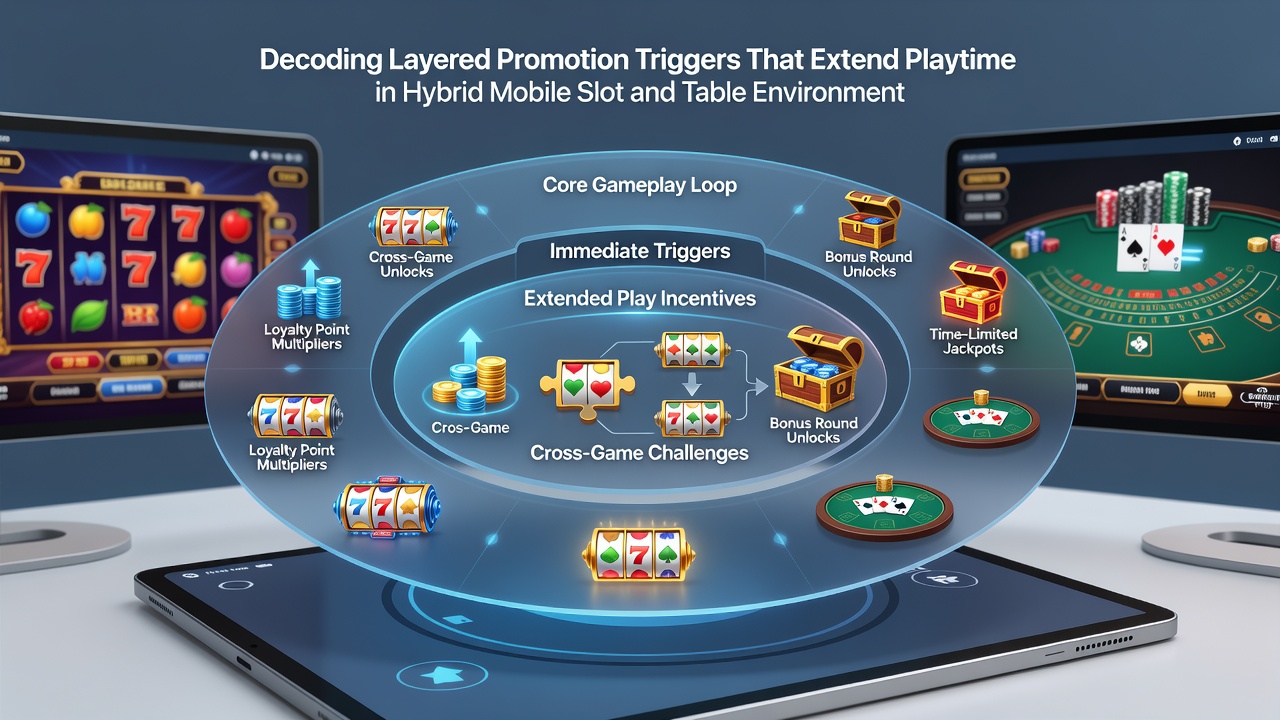
Promotion layers typically begin with entry-level incentives such as deposit matches or free spin allocations that unlock upon initial funding or first spins. Subsequent stages require cumulative metrics like total wagers placed or specific symbol combinations achieved, after which players receive multipliers or bonus credits applicable to table games. Observers note that this sequencing creates natural progression points where users shift from automated slot play to decision-based table environments without leaving the application interface.
Systems often incorporate time-bound elements where activity within a defined window advances the layer status, and researchers have documented how these windows align with peak usage periods to maximize retention. In July 2026 several platforms introduced synchronized triggers that link slot reel outcomes directly to table game entry bonuses, allowing seamless transitions when reel sequences meet predefined criteria.
Slot-Specific Activation Patterns
Slot sections within hybrid environments use reel-based events to initiate deeper layers, including consecutive wins or bonus round completions that feed into shared loyalty pools. These pools accumulate value across sessions and convert into table game advantages such as reduced house edges or enhanced payout tables once players migrate formats. Figures from platform analytics reveal that users who engage with three or more layered triggers within a single session extend their time on device by an average of 22 minutes compared to those who encounter only base promotions.
Table Game Integration Mechanics
Table environments incorporate decision-point rewards that build upon slot-derived progress, for instance granting insurance options or side-bet credits when players carry forward accumulated points. Automated table variants often mirror slot trigger logic by awarding streak multipliers after consecutive hands, and this parallelism encourages users to alternate between formats while preserving overall session momentum. Studies conducted by the Alcohol and Gaming Commission of Ontario have tracked how these integrated systems influence player movement across game categories in regulated markets.
Additional layers appear when funding methods interact with promotion status, as certain deposit types accelerate layer advancement and unlock table-specific incentives. Operators configure these interactions to reward consistent payment patterns without altering core game mathematics, and external data shows corresponding lifts in cross-format play frequency.
Measurement of Session Extension Effects
Analytics platforms record playtime through timestamped event logs that capture layer activation points alongside game switches. When researchers aggregate these logs across large user cohorts, patterns emerge showing that completion of secondary and tertiary layers produces the strongest correlation with prolonged activity. One analysis covering multiple jurisdictions found that hybrid applications employing five or more sequential triggers achieved 18 percent longer average sessions than those limited to simpler single-stage offers.
Geographic variations appear in how regulators monitor these systems, with Australian oversight bodies such as the Victorian Commission for Gambling and Liquor Regulation requiring transparency reports on trigger frequency and player outcome distributions. Such reporting helps quantify whether layered designs maintain compliance while delivering the documented engagement extensions.
Technological Infrastructure Supporting Layers
Backend systems manage layer state through real-time databases that synchronize across slot and table modules, ensuring that progress achieved in one format instantly updates eligibility in the other. Push notifications timed to layer milestones prompt users to return or continue, and these alerts integrate with device-level data to optimize delivery windows. Developers continue refining the logic that determines layer difficulty curves so that advancement feels attainable yet requires sustained participation.
Conclusion
Layered promotion triggers in hybrid mobile slot and table environments operate through sequenced conditions that reward cumulative activity and format transitions. Available data links these structures to extended session lengths, with integration points between game types serving as key retention mechanisms. Regulatory frameworks in multiple regions continue to shape how operators implement and report on these systems, providing ongoing visibility into their operational patterns and effects on user behavior.